

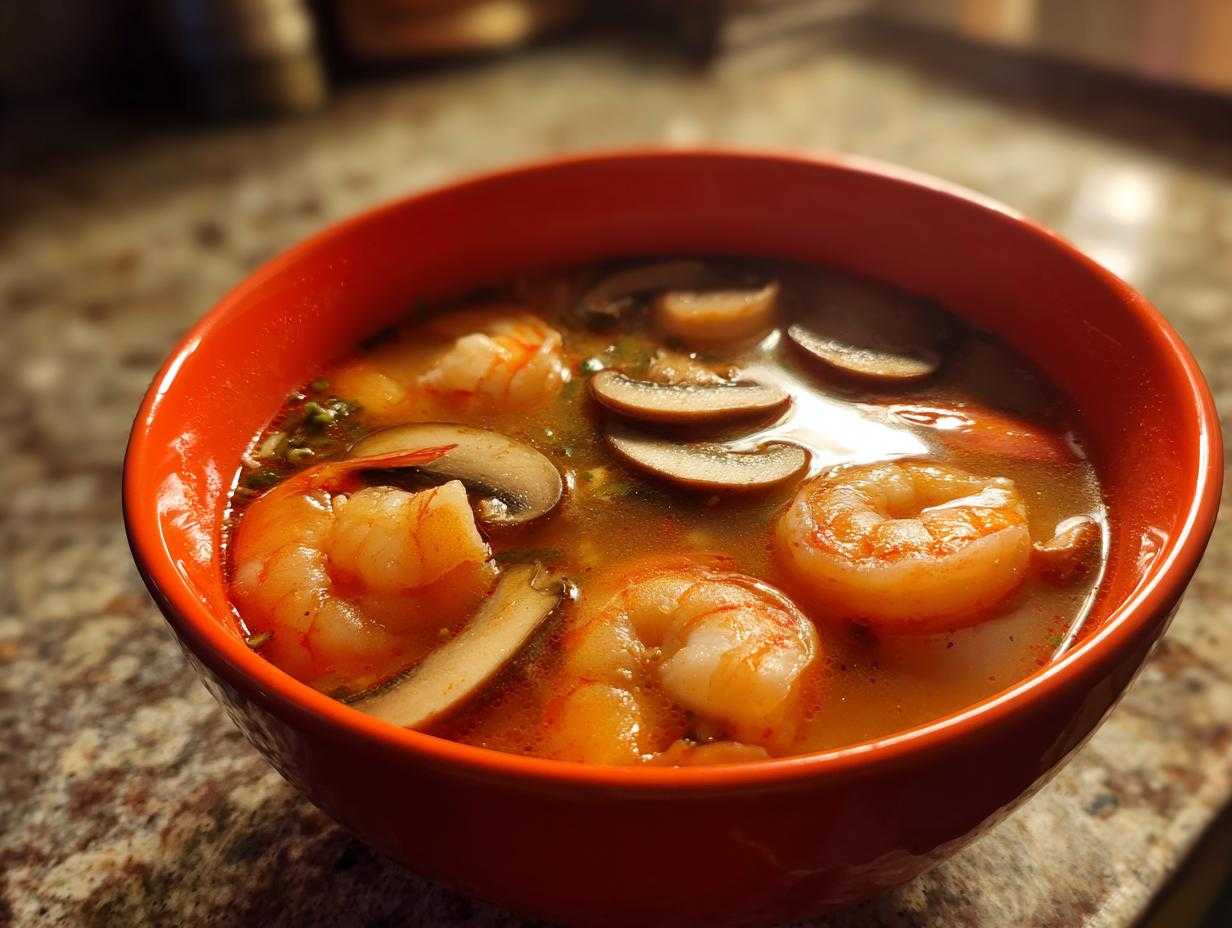
Honestly, I used to think getting that true, vibrant flavor of a perfect Thai restaurant soup at home was impossible. You know, that rush of heat followed by that sharp, clean sourness? But I promise you, making authentic tom yum soup doesn’t require calling in sick to work for an afternoon of shopping! This specific recipe for classic Shrimp Tom Yum Goong is absolutely the best and easiest way to nail that signature spicy and sour balance right on your stovetop. It truly captures the heart of Thai home cooking, and once you master balancing the lime and chili, you’ll be hooked on making your own homemade Thai food.
Why This Classic Shrimp Tom Yum Soup Recipe Works (Easy Thai Soup)
If you’re looking for a truly quick weeknight soup that doesn’t sacrifice authenticity, you’ve found the one! This recipe is built to deliver big flavor with minimal fuss. I love how straightforward it is, yet the result tastes like you spent hours over a simmering pot.
Here’s what makes this the best approach to homemade Thai cooking:
- It’s fast! We’re looking at maybe 30 minutes total for this incredible aromatic soup.
- We nail that crucial spicy sour soup combination right off the bat.
- Best part? I’ve built in instructions for both the simple, clear broth style and the rich, creamy version, so you never have to guess again. Trust me on this one—it’s versatile! It’s almost as easy as my five-ingredient corn soup.
Essential Ingredients for Authentic Tom Yum Soup
Okay, this is where the magic—and the authenticity—really happens, so don’t go swapping things out on me! Making a real Thai soup recipe relies on getting these core ingredients right. I’ve listed everything you need below, but pay close attention to how those beautiful aromatics need to be prepped. If you can find these items, you’re already halfway to tasting Thailand!
For the broth, we use 4 cups of good chicken or vegetable broth, 1 pound of shrimp (I always make sure they are peeled and deveined—nobody wants to stop eating to peel a giant shrimp!), mushrooms, cilantro, and basil for the finish. Don’t forget the optional coconut milk if you want to lean into that rich, creamy Tom Yum style!
I found this slaw recipe last week, and it just reminded me how crucial good ingredients are, no matter the cuisine!
Aromatic Base: Lemongrass Galangal Soup Components
You absolutely must have the Big Three here: lemongrass, galangal, and kaffir lime leaves. If you miss these, you’re just making hot, sour broth, not tom yum soup! I tell everyone the same thing: take those tough outer layers off the lemongrass stalks, cut them into two-inch pieces, and then spend a solid minute or two bruising them with the back of a heavy knife. Bruising them is key because it literally splits the fibers open, letting all that incredible citrusy, piney flavor flood your broth during simmering. We slice the galangal thinly and tear those kaffir lime leaves up a bit to wake them up, too.
Protein and Flavor Adjustments for Your Tom Yum Soup
Once the herbs are swimming, flavor is all about that perfect trinity of salty, sour, and spicy. We use 1/4 cup of fish sauce for the necessary salty depth—it’s non-negotiable in an authentic Tom Yum! Then, we pull it off the heat right before stirring in 1/4 cup of fresh lime juice. Please, please use fresh lime juice; the bottled stuff tastes flat next to these strong aromatics.
For that signature reddish color and a little background sweetness that holds everything together, I love adding about 1 tablespoon of Thai chili paste, or Nam Prik Pao. It’s optional, but it really elevates this into a bold flavor soup that rivals your favorite takeout spot!
Step-by-Step Instructions for Making Tom Yum Soup
Look, I know following soup instructions can feel like a chemistry lesson, but I promise this is straightforward. The secret to making this the best Thai soup is giving those herbs the time they need to bleed all their glorious flavor into the liquid base. Once that infusion step is done, the rest flies by! Remember, we are aiming for that incredible aromatic soup profile, and that takes a little patience at the start.
You’ll want to get your broth, the bruised lemongrass, galangal, lime leaves, and chilies into a pot and bring that up to a boil over medium-high heat. Once it’s bubbling away, immediately drop the heat down so it’s just gently simmering—not violently boiling. Let that infusion happen for a full 10 minutes. Don’t rush this part; this is what transforms plain broth into authentic Tom Yum!
If you’re looking for something else speedy, my spicy garlic shrimp recipe is another great 30-minute winner!
Infusing the Broth for a Bold Flavor Soup
After that 10-minute simmer, you have to stop and strain the broth. Yes, you have to fish out all those chunks of lemongrass and galangal! We want the flavor, not the tough texture. Strain the liquid right back into the clean pot. Then, we bring it back to a gentle simmer and add your mushrooms. Let those cook for just a minute or two so they get soft and soak up the amazing liquid.
Finishing the Tom Yum Goong (Shrimp Soup Recipe)
Now for the star! Add your peeled and deveined shrimp in. They cook lightning fast! Seriously, once they turn beautiful pink—about 2 to 3 minutes max—take the pot OFF the heat. This is super important for a great shrimp soup recipe. Right after you turn the heat off, stir in the fish sauce and that optional chili paste if you’re using it for color. The very last thing you do is stir in the tangy fresh lime juice. Adding the lime when it’s off the heat keeps the flavor bright and stops it from tasting bitter. That’s it!
Clear vs. Creamy Tom Yum Soup: Two Authentic Variations
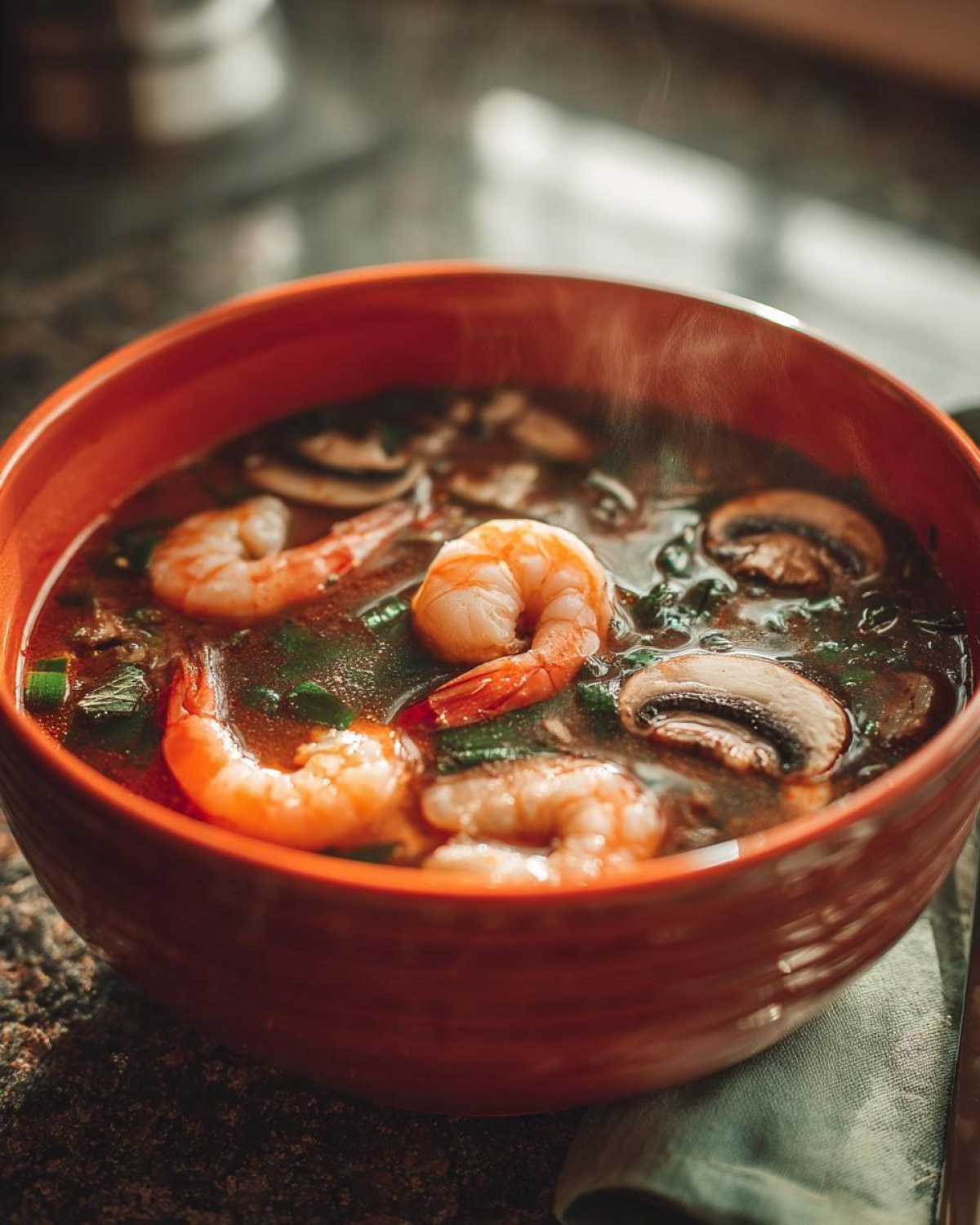
This is the part where I feel like a true Thai soup master, because truly understanding tom yum soup means knowing the difference between Nam Sai and Nam Khon. You don’t have to commit to one forever—you can literally switch it up batch by batch, or even bowl by bowl! It’s all about what you add right at the end, right after you’ve pulled the pot off the fire.
For the classic, lighter version, we aim for Clear Tom Yum, or Nam Sai. This showcases the pure, bright essence of the lemongrass and lime. Once your shrimp are cooked and you’ve stirred in your fish sauce and lime juice (remember, off the heat!), just ladle it straight into your bowl. Garnish immediately with tons of fresh cilantro and Thai basil if you have it. That vibrant, clear broth is so comforting and such a perfect spicy sour soup experience.
Now, if you are craving comfort food, that’s when we turn it into the Creamy Tom Yum, or Nam Khon. For this, after you’ve turned the heat off, you gently stir in about 1/4 cup of coconut milk. I say gently because you don’t want it to curdle or boil again once the milk is in. Just enough to give that gorgeous, slightly pale color and a rich mouthfeel. It balances the sharpness of the lime beautifully! If you love lighter broth recipes, check out my recipe for glass noodle soup!
The main takeaway here is the timing for the creamy option: always add the coconut milk after the pot is off the burner. This keeps the texture smooth and prevents that layer of oil from separating out. See? You’re practically a pro at this Thai soup recipe now!
Tips for the Best Tom Yum Soup Every Time
Even though this is already my ultimate favorite recipe, nobody gets it perfect on the very first try! That beautiful, complex flavor of a comforting spicy soup comes from constantly tasting and tweaking until it hits the spot for *you*. Think of it like tuning a guitar; you have to adjust the sourness and the saltiness until the whole chord rings true.
After the shrimp cooks and you’ve turned the heat off, taste the broth. Is it too sharp? Add a tiny splash more fish sauce or maybe a pinch of sugar if you went too heavy on the lime. Is it a little flat? Time for more fresh lime juice! This final tasting process is what separates a decent soup from the best Thai soup you’ve ever made.
And regarding the heat—because this is a spicy sour soup, right?—you control it entirely with those Thai chilies. If you crushed three but realize halfway through tasting that you want it fire engine hot, don’t panic! Just crush up one more chili and let it simmer in the broth for just 30 seconds right before serving. Remember, you can always add heat, but you can never really take it away!
If you’re looking for another excellent flavor bomb to add to your weeknight rotation, this mango chicken stir-fry is an absolute winner.
Variations: Making Vegetarian Tom Yum or Tom Yum with Chicken
I just love how flexible this recipe is! You don’t need to hunt for a completely different recipe if you’re skipping shrimp this week. The instructions for making **Vegetarian Tom Yum** or **Tom Yum with Chicken** are super simple substitutions, thank goodness.
For a vegetarian take, swap out the chicken broth for a good quality vegetable broth, and instead of shrimp, use firm tofu that you’ve pressed well to dry out any excess water. The most important swap is seasoning: forget the fish sauce and use soy sauce or a vegetarian fish sauce substitute—this keeps the salty, umami anchor of the soup intact.
If you’re making **Tom Yum with Chicken**, the process is so easy. Just swap the shrimp for thin slices of chicken breast. You toss the chicken in right when you add the mushrooms (Step 4 in the instructions). It only needs about 4 to 5 minutes to cook through and turn opaque, so just keep an eye on it so it doesn’t get tough!
Serving Suggestions for Your Thai Soup Recipe
So you’ve made your perfect, complex, spicy, and sour tom yum soup—congratulations! Now, how do you serve it so it feels like a complete, satisfying meal? You can’t just stare into the bowl lovingly (though you’ll want to!); you need something underneath to soak up all that legendary broth.
My absolute favorite way to serve this is simple: steamed jasmine rice. Nothing beats the fluffy, slightly sticky texture of warm jasmine rice alongside that bright, tangy soup. The rice acts as the perfect neutral base, letting the punchy flavors of the lemongrass and chili really shine without getting lost. It’s the true classic pairing for any delicious Thai soup recipe.
If you’re feeling more like an Asian noodle soup vibe, you can totally toss in some cooked rice vermicelli noodles directly into the bowl before serving. Just make sure you cook them separately so they don’t soak up all your broth while the soup simmers!
And don’t forget the greens! I know I mentioned cilantro and basil, but they are essential for visual appeal, too. When you garnish generously right before bringing the bowls to the table, it adds that final layer of freshness that hits your nose before the spoon even gets there. If you’re looking for another great way to use up basil, you have to try this basil fried rice recipe next time!
Keep it simple, let the broth be the star, and you’ve got yourself an authentic, restaurant-quality dinner right in your kitchen.
Storage and Reheating Instructions for Leftover Aromatic Soup
I always hope there’s leftovers because this aromatic soup tastes even better the next day once those spices have settled overnight, but you do have to treat the leftovers carefully!
You’ve got two different soups here, remember? The clear one (Nam Sai) and the creamy one (Nam Khon). You need to handle them differently when reheating.
For the Clear Tom Yum, store it in the fridge in an airtight container for up to three days. When you reheat it, just warm it gently on the stovetop over low to medium heat. Do not let it rip boil! If you boil the clear broth hard after it cools down, you shock the flavor, and it just won’t taste as bright. It feels like the zestiness goes flat, you know?
The big thing to watch out for is the shrimp. Shrimp is fragile! Reheating shrimp, even in soup, will make it tough and rubbery if you aren’t careful. It’s best to remove the shrimp before storing the soup. Then, when you reheat the broth, simmer it, add some fresh shrimp, cook them for just two minutes until pink, and then adjust your lime right at the end. You usually need a fresh squeeze of lime, too!
If you stored the Creamy Tom Yum, same rules apply for the shrimp, but the coconut milk makes it a bit more forgiving. Warm it slowly, stirring constantly so the milk doesn’t separate or stick to the bottom of the pan. If it looks like it separated a little, just give it a really vigorous whisk off the heat, and it usually comes right back together!
If you’re on the fence about whether you’ll finish it, skip adding the fresh garnishes like cilantro until you reheat it for serving. Nobody likes soggy basil!
Frequently Asked Questions About Spicy Sour Soup
I get so many questions about this recipe because everyone wants to capture that pure Taste of Thailand Recipes vibe at home! Don’t worry if you can’t find every single specialty item at your usual grocery store; we can usually find a workable solution so you can still enjoy this amazing spicy sour soup.
What if I cannot find Kaffir Lime Leaves for my Tom Yum Soup?
Oh, the Kaffir lime leaves—they are the essence of Thai cooking, aren’t they? If you absolutely cannot find them in the fresh produce section or frozen aisle of your Asian market, don’t give up! You can sometimes substitute them with lime zest. I’m not going to lie, it’s not a perfect match—you lose that unique floral note—but it helps bring the necessary citrus brightness back into your aromatic soup. Use the zest of one whole lime, but only the pale green part, really ensuring you avoid that bitter white pith underneath. Another trick some folks use is a couple of fresh bay leaves, but personally, I stick to maximizing citrus flavor if the leaves are missing.
Can I use dried galangal instead of fresh for this Thai Soup Recipe?
Again, fresh is always, always better for dishes like this, but sometimes we have to work with what we have! Dried galangal is much less pungent than fresh ginger or turmeric, and it’s drier, so you won’t get the same volume of flavor release. If you must use dried, use about one-third of the amount you would use fresh, and you might want to simmer it for an extra 5 minutes during the infusion step just to try and coax some of the flavor out before you strain it. I’d recommend chopping it finely before simmering if you have a weak strainer, just in case bigger pieces slip through!
How do I make this Spicy Sour Soup less fiery hot?
This is the easiest fix in the whole recipe! Remember those Thai chilies we crushed? They bring the main heat. If three chilies were too much for you, next time, start with just one a half, or maybe even skip crushing them and just toss one or two whole into the simmering broth, removing it before you strain everything out. That way, you get a little warmth infused without the direct, aggressive punch of the chili seeds right in your bowl. You can always add hot sauce later, but you can’t take it out!
Can I prepare the broth base ahead of time?
Absolutely! Since the first half of this recipe is really just about infusing a basic stock, this is the perfect make-ahead stage for your Easy Thai Soup. Go ahead and complete steps 1 through 3—simmer the aromatics, strain out all the solids (lemongrass, galangal, etc.), and return the liquid to the pot. You can let this strained broth cool completely, cover it tightly, and keep it in the fridge for up to three days. When you’re ready to eat, just bring that base back to a simmer, add your mushrooms and shrimp, and finish it off exactly as instructed. It makes busy weeknights totally stress-free!
Estimated Nutrition for This Tom Yum Soup
Whenever I post a recipe like this, I always get emails asking about the macros, and I completely get it! Figuring out how a big flavor bomb like tom yum soup fits into your week is important. But you have to promise me you’ll take these numbers with a grain of salt, okay? Because this is an estimate based on using standard broth and adding the full amount of coconut milk for that creamy version.
The exact nutrition changes quite a bit depending on which shrimp you buy, how much fish sauce you end up using (I know I always add a little extra!), and especially if you skip the coconut milk for a clearer broth. But just so you have a good baseline for this delicious, low fat soup idea:
- Serving Size: About 1.5 cups
- Calories: Around 150 (This can drop significantly if you skip the coconut milk!)
- Protein: A whopping 24g! That shrimp really does the heavy lifting here.
- Fat: Low, around 3g total.
- Carbohydrates: Right around 8g.
The sodium count is definitely something to watch, which is typical for any dish relying heavily on fish sauce for that intense flavor. If you’re tracking sodium closely, definitely go light on the fish sauce during your final adjustment stage. This dish is packed with protein and flavor, making it a fantastic, light, and filling option for dinner!
PrintClassic Shrimp Tom Yum Soup (Tom Yum Goong)

Make authentic, spicy, and sour Tom Yum Goong at home. This recipe provides instructions for both the clear (Nam Sai) and creamy (Nam Khon) versions.
- Prep Time: 10 min
- Cook Time: 20 min
- Total Time: 30 min
- Yield: 4 servings
- Category: Soup
- Method: Stovetop Simmering
- Cuisine: Thai
- Diet: Low Fat
Ingredients
- 4 cups chicken or vegetable broth
- 1 pound large shrimp, peeled and deveined
- 2 stalks lemongrass, tough outer layers removed, cut into 2-inch pieces, bruised
- 1 inch galangal, sliced
- 4 kaffir lime leaves, torn
- 2-3 Thai chilies, crushed (adjust to heat preference)
- 1/4 cup fish sauce
- 1/4 cup fresh lime juice
- 1 tablespoon Thai chili paste (Nam Prik Pao) (optional, for color and depth)
- 1 cup straw mushrooms or button mushrooms, halved
- 1/2 cup cilantro, chopped, for garnish
- 1/4 cup Thai basil leaves (optional)
- 1/4 cup coconut milk (for creamy version only)
Instructions
- Combine the broth, bruised lemongrass, sliced galangal, torn kaffir lime leaves, and crushed chilies in a medium pot. Bring the mixture to a boil over medium-high heat.
- Reduce the heat and simmer for 10 minutes to infuse the broth with the aromatics.
- Strain the broth to remove the lemongrass, galangal, and kaffir lime leaves, returning the liquid to the pot. Discard the solids.
- Add the mushrooms and bring the broth back to a gentle simmer.
- Add the shrimp and cook until they turn pink and opaque, about 2 to 3 minutes. Do not overcook.
- Stir in the fish sauce and Thai chili paste (if using).
- Remove the pot from the heat. Stir in the fresh lime juice.
- For the Clear Version (Nam Sai): Serve immediately garnished with cilantro and basil.
- For the Creamy Version (Nam Khon): Before serving, stir in the coconut milk gently until combined, then garnish.
Notes
- For a Vegetarian Tom Yum, substitute vegetable broth and use firm tofu or mixed vegetables instead of shrimp. Replace fish sauce with soy sauce or vegetarian fish sauce substitute.
- To make a Chicken Tom Yum, use sliced chicken breast instead of shrimp, adding it when you add the mushrooms.
- Adjust the amount of lime juice and fish sauce at the end to balance the sour and salty flavors to your liking.
Nutrition
- Serving Size: 1.5 cups
- Calories: 150
- Sugar: 3
- Sodium: 850
- Fat: 3
- Saturated Fat: 1
- Unsaturated Fat: 2
- Trans Fat: 0
- Carbohydrates: 8
- Fiber: 1
- Protein: 24
- Cholesterol: 160


Comments are closed.