Ultimate Beginner’s Guide: How to Make, Feed, and Maintain a Bubbly Sourdough Starter From Scratch
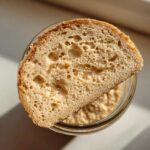
Welcome to your simple, step-by-step guide to creating your own natural yeast starter. We will show you how to make an active sourdough starter using just flour and water, perfect for beginners ready to bake artisanal bread.
- Prep Time: 5 min daily
- Cook Time: 0 min
- Total Time: 7 days (active creation)
- Yield: 1 active starter culture
- Category: Baking Foundation
- Method: Natural Fermentation
- Cuisine: Global
- Diet: Vegan
Ingredients
Scale
- 100g Whole Grain Flour (Rye or Whole Wheat recommended for initial mix)
- 100g Unbleached All-Purpose Flour (for later feedings)
- 100g Unchlorinated Water (room temperature)
Instructions
- Day 1: Mix 50g of whole grain flour and 50g of room temperature water in a clean glass jar. Stir until fully combined. Cover loosely and let it sit at room temperature (ideally 70-75°F or 21-24°C) for 24 hours.
- Day 2: You may see little to no activity. Discard half of the mixture. Add 50g of whole grain flour and 50g of water to the remaining starter. Mix well, cover loosely, and wait 24 hours.
- Day 3: You might see some bubbles or smell a slight sour/vinegary scent. This is normal. Discard half. Feed with 50g of whole grain flour and 50g of water. Wait 24 hours.
- Day 4: Switch to using only unbleached all-purpose flour for feedings. Discard half. Feed with 50g of all-purpose flour and 50g of water. You should see more consistent bubbling. Wait 24 hours.
- Day 5 & 6: Continue the discard and feed process every 24 hours using 50g of all-purpose flour and 50g of water. Your starter should begin to double in size within 6-12 hours after feeding.
- Day 7 and Beyond (Maintenance): Once your starter consistently doubles in size after feeding, it is active. You can now switch to a 1:1:1 ratio (e.g., 50g starter, 50g flour, 50g water) every 12-24 hours if keeping it on the counter, or feed once a week if storing it in the refrigerator.
Notes
- Use filtered or bottled water if your tap water is heavily chlorinated, as chlorine can slow down yeast growth.
- If your kitchen is cold (especially in winter), find a warmer spot, like inside an oven with just the light on, to encourage activity.
- A mature, active sourdough starter should float when a small spoonful is dropped into a glass of water. This confirms it is ready for baking.
- Consistency should resemble thick pancake batter. If it seems too stiff, add a tiny bit more water during the next feed.
Nutrition
- Serving Size: 100g culture
- Calories: 200
- Sugar: 0.5
- Sodium: 1
- Fat: 0.5
- Saturated Fat: 0.1
- Unsaturated Fat: 0.4
- Trans Fat: 0
- Carbohydrates: 40
- Fiber: 2
- Protein: 6
- Cholesterol: 0