


My kitchen used to be a place of quiet desperation. Weeks were a whirlwind of meetings. My weekends were my only escape. Sundays were special. That’s when I’d trade my work clothes for an apron. I’d turn up the music loud. The market’s freshest finds would fill my kitchen. It was my sanctuary. My camera captured more than food. It captured pure joy. Then I thought, why save this joy for just one day? This Pad Thai with Shrimp is a taste of that joy. It’s a reminder that every day can feel like a Sunday. Making authentic Pad Thai at home is easier than you think. This recipe brings that vibrant street-food flavor right to your table. It’s a culinary adventure waiting to happen.
Why You’ll Love This Pad Thai with Shrimp Recipe
You’ll adore this Pad Thai with Shrimp recipe.
- It’s incredibly quick to make.
- The steps are super easy to follow.
- You get an authentic, delicious taste.
- It’s a flavorful weeknight meal winner.
- Your family will ask for it again.
Essential Equipment for Perfect Pad Thai with Shrimp
You’ll need a few key tools for success:
- A wok or large, deep skillet.
- Sturdy spatulas for tossing.
- Measuring cups and spoons.
- A small bowl for the sauce.
Gathering Your Pad Thai with Shrimp Ingredients
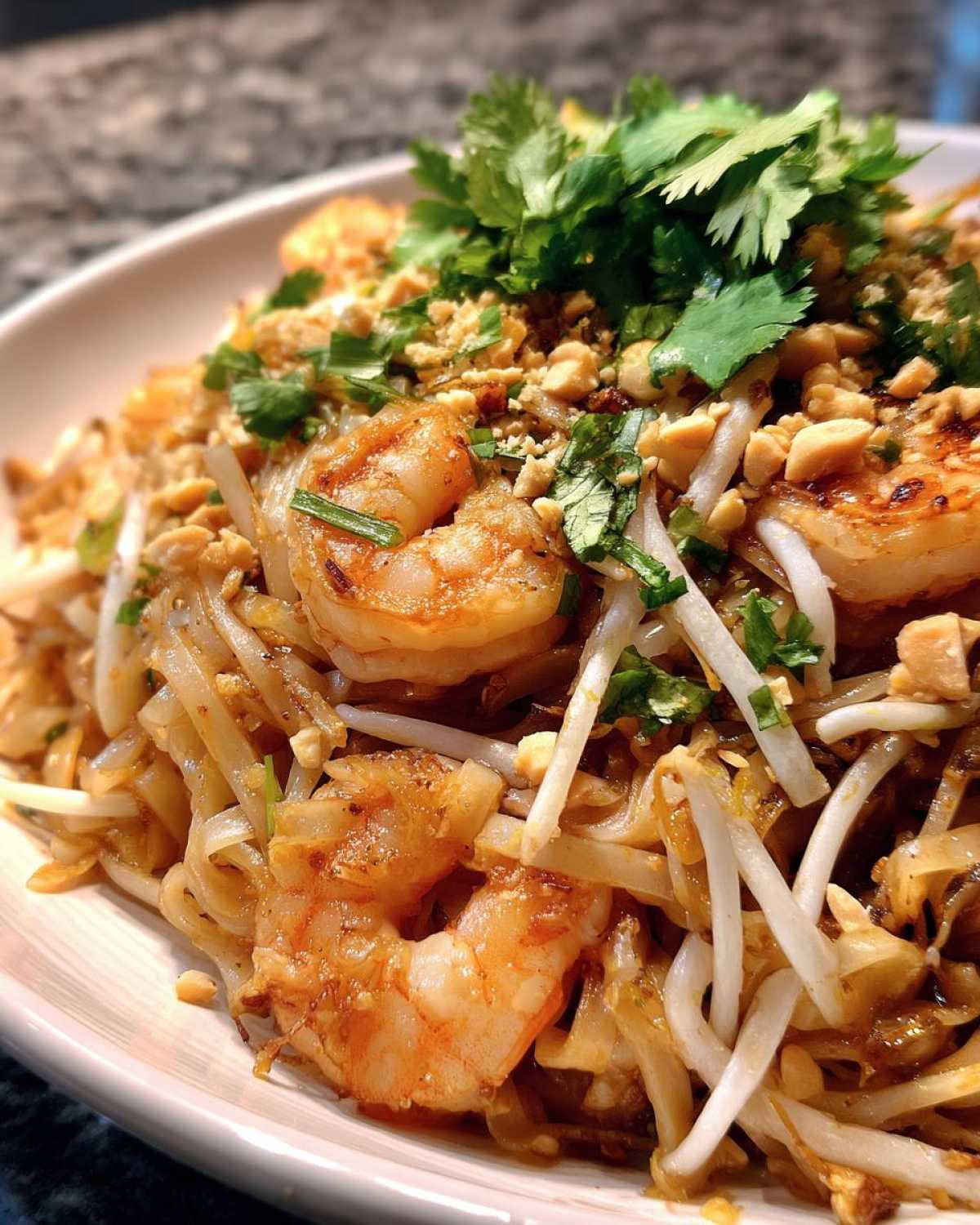
Let’s get everything ready for our amazing Pad Thai with Shrimp. First, grab 8 ounces of dried rice noodles. These are usually flat and about a quarter-inch wide. You’ll also need 8 ounces of shrimp, peeled and deveined, ready to go. Don’t forget 2 cloves of garlic, minced nice and fine. If you’re adding tofu, get about half a cup of firm tofu, cut into small cubes. You’ll need 2 large eggs, lightly beaten. For that fresh crunch, have 1/2 cup of bean sprouts handy. Then, 1/4 cup of chopped peanuts, 2 tablespoons of chopped fresh cilantro, and 1 tablespoon of chopped fresh scallions will be our beautiful garnishes. Oh, and a few lime wedges for serving are a must!
For the Tangy Pad Thai Sauce
The sauce is the heart of this dish. You’ll need 1/4 cup of tamarind paste. Make sure it’s the paste, not the concentrate. Then, measure out 2 tablespoons of fish sauce for that savory depth. We’ll add 2 tablespoons of brown sugar for a touch of sweetness. A tablespoon of rice vinegar brings a nice tang. And if you like a little heat, 1 teaspoon of sriracha or chili garlic sauce is perfect.
Crafting Your Delicious Pad Thai with Shrimp
Now for the fun part – bringing it all together! Let’s make some incredible Pad Thai with Shrimp.
Preparing the Noodles for Your Pad Thai with Shrimp
First, let’s get those noodles ready. Cook 8 ounces of dried rice noodles according to the package directions. This usually takes about 5-7 minutes. You want them tender but still a little firm. Drain them well and set them aside. A little rinse under cool water can stop them from sticking together.

Cooking the Shrimp and Aromatics for Pad Thai with Shrimp
Get your large skillet or wok nice and hot over medium-high heat. Add 2 tablespoons of vegetable oil. Once it shimmers, add your 8 ounces of shrimp. Cook them for just 2-3 minutes. They should turn pink and opaque. Don’t overcook them! Remove the shrimp and set them aside. Now, add the minced garlic to the same skillet. Cook it for about 30 seconds until it smells amazing. If you’re using tofu, add the cubed tofu now. Cook it until it’s lightly browned on all sides.
The Art of Combining Your Pad Thai with Shrimp
Push the tofu and garlic to one side of your skillet. Pour your beaten eggs into the empty side. Let them set slightly, then gently scramble them until they’re just cooked through. Now, add the cooked noodles and your prepared sauce to the skillet. Toss everything together gently. Add the cooked shrimp and the bean sprouts. Keep tossing until the sprouts are just starting to wilt. This is the magic moment where all the flavors meld. Your Pad Thai with Shrimp is almost ready!

Tips for Achieving Restaurant-Quality Pad Thai with Shrimp
Getting that amazing restaurant taste at home for your Pad Thai with Shrimp is totally doable! My biggest tip? Make sure your wok or skillet is screaming hot before you add anything. Seriously, let it heat up properly! This is key for that perfect stir-fry. Don’t be afraid to taste and adjust the sauce before you toss it all in. Maybe you like it sweeter? Add a tiny bit more brown sugar. Prefer it spicier? A dash more sriracha. I learned this the hard way. Also, resist the urge to cram too much into the pan at once. Overcrowding steams the ingredients instead of stir-frying them. Cook in batches if you need to. A little patience here makes a world of difference.
Ingredient Substitutions and Variations for Pad Thai
Feel free to get creative with your Pad Thai! For a vegetarian version, skip the shrimp and fish sauce. Soy sauce or tamari works great as a substitute. You can also add more veggies like broccoli florets or shredded carrots for extra color and nutrients. Some people love adding cubed chicken or even pork instead of shrimp. It’s all about what you prefer!
Serving and Storing Your Pad Thai with Shrimp
Time to plate up your amazing Pad Thai with Shrimp! Serve it hot, right from the skillet. Pile it high onto plates. Sprinkle generously with chopped peanuts. Add fresh cilantro and scallions. A squeeze of fresh lime juice cuts through the richness. It tastes so fresh. This dish is best enjoyed immediately. But if you have leftovers, don’t worry! Proper storage keeps it tasty for later. We’ll cover how to keep this noodle dish perfect.

Storing Leftover Pad Thai with Shrimp
Let your cooled Pad Thai with Shrimp sit at room temperature briefly. Then, transfer it to an airtight container. Store it in the refrigerator for up to 2 days. Make sure the lid is sealed tight.
Reheating Your Pad Thai with Shrimp
Reheating is easy. You can use a skillet over medium heat. Add a splash of water or broth. Toss gently until heated through. This keeps the noodles from getting dry or mushy. A microwave works too. Heat in short bursts, stirring in between. Your Pad Thai with Shrimp will be delicious again!
Frequently Asked Questions About Pad Thai with Shrimp
Got questions about making the best Pad Thai with Shrimp? I’ve got answers!
What kind of noodles are best for Pad Thai?
Flat, dried rice noodles are traditional. Look for ones labeled “Pad Thai noodles” or “Chantaboon noodles.” They’re usually about a quarter-inch wide. They absorb the sauce beautifully!
Can I make Pad Thai with shrimp without fish sauce?
Yes, absolutely! For a vegetarian or vegan option, swap the fish sauce for soy sauce or tamari. You might need to adjust the brown sugar slightly to balance the flavors. It still tastes wonderful!
How do I make the Pad Thai sauce sweeter?
Simply add a little more brown sugar to the sauce mixture. You can also use a touch of honey or maple syrup if you prefer. Taste as you go!
Can I use other proteins instead of shrimp?
Definitely! Chicken, firm tofu, or even thinly sliced pork work great in this noodle dish. Just adjust the cooking time based on the protein you choose.
Nutritional Estimate for Pad Thai with Shrimp
Curious about the breakdown of this delicious Pad Thai with Shrimp? Keep in mind these numbers are estimates. They can change based on exact ingredients and portion sizes. We’re looking at estimated calories, protein, carbohydrates, fat, and sugar content. Exact values will vary with your preparation.
PrintAmazing Pad Thai with Shrimp: 15 Minute Joy

Learn to make delicious Pad Thai with shrimp, peanuts, and a tangy sauce. This recipe is perfect for a flavorful weeknight meal.
- Prep Time: 15 minutes
- Cook Time: 10 minutes
- Total Time: 25 minutes
- Yield: 2 servings
- Category: Main Course
- Method: Stir-fry
- Cuisine: Thai
- Diet: Vegetarian
Ingredients
- 8 ounces dried rice noodles
- 2 tablespoons vegetable oil
- 8 ounces shrimp, peeled and deveined
- 2 cloves garlic, minced
- 1/2 cup firm tofu, cubed (optional)
- 2 large eggs, lightly beaten
- 1/2 cup bean sprouts
- 1/4 cup chopped peanuts
- 2 tablespoons chopped fresh cilantro
- 1 tablespoon chopped fresh scallions
- Lime wedges, for serving
- Sauce:
- 1/4 cup tamarind paste
- 2 tablespoons fish sauce
- 2 tablespoons brown sugar
- 1 tablespoon rice vinegar
- 1 teaspoon sriracha or chili garlic sauce (optional)
Instructions
- Cook rice noodles according to package directions. Drain and set aside.
- In a small bowl, whisk together tamarind paste, fish sauce, brown sugar, rice vinegar, and sriracha (if using) for the sauce.
- Heat vegetable oil in a large skillet or wok over medium-high heat.
- Add shrimp and cook until pink and opaque, about 2-3 minutes. Remove shrimp from skillet and set aside.
- Add garlic to the skillet and cook until fragrant, about 30 seconds.
- If using tofu, add it to the skillet and cook until lightly browned.
- Push tofu and garlic to one side of the skillet. Pour beaten eggs into the other side and scramble until cooked through.
- Add the cooked noodles and sauce to the skillet. Toss to combine everything.
- Add the cooked shrimp and bean sprouts to the skillet. Toss gently until bean sprouts are slightly wilted.
- Serve immediately, garnished with chopped peanuts, cilantro, scallions, and lime wedges.
Notes
- For a vegetarian option, omit the shrimp and fish sauce. Use soy sauce or tamari instead of fish sauce and add more vegetables like broccoli or carrots.
- Adjust the sweetness and spiciness of the sauce to your preference.
- Ensure your wok or skillet is hot before adding ingredients for the best stir-fry results.
Nutrition
- Serving Size: 1 serving
- Calories: Approximately 600-700 (this is an estimate and can vary)
- Sugar: Approximately 20-30g (this is an estimate and can vary)
- Sodium: Approximately 1500-2000mg (this is an estimate and can vary)
- Fat: Approximately 20-30g (this is an estimate and can vary)
- Saturated Fat: Approximately 5-8g (this is an estimate and can vary)
- Unsaturated Fat: Approximately 15-20g (this is an estimate and can vary)
- Trans Fat: 0g
- Carbohydrates: Approximately 80-100g (this is an estimate and can vary)
- Fiber: Approximately 4-6g (this is an estimate and can vary)
- Protein: Approximately 25-35g (this is an estimate and can vary)
- Cholesterol: Approximately 200-250mg (this is an estimate and can vary)


Comments are closed.