

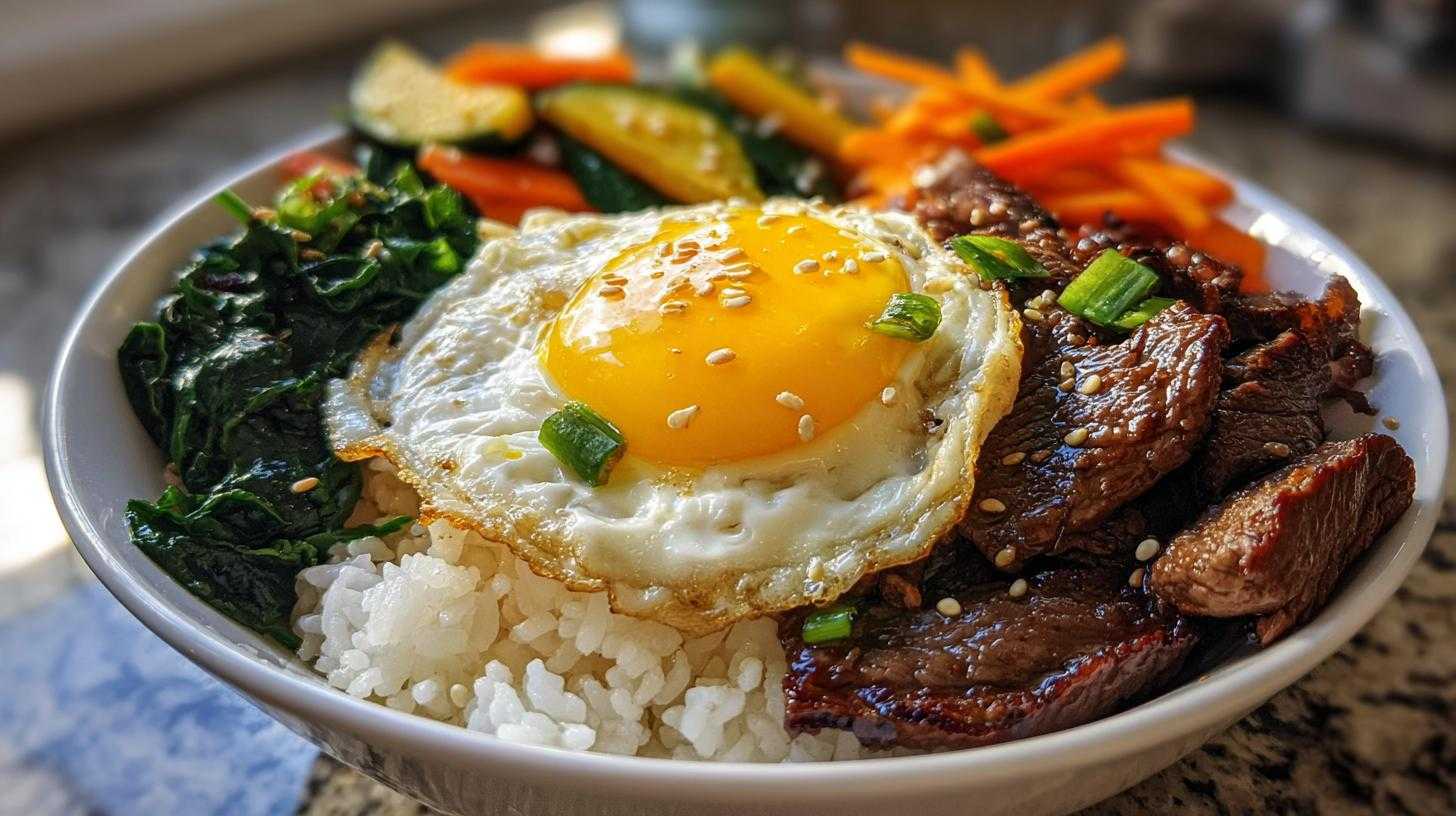
G’day, food lovers! I’m Chloe, and I’m so excited to share a recipe that truly embodies the spirit of my blog, Sunday Flavor. It’s all about bringing that vibrant, joyful feeling into your everyday cooking. Today, we’re diving into the colourful world of the Korean Bibimbap Bowl. This isn’t just a meal; it’s a feast for the eyes and the palate, a beautiful arrangement of textures and tastes that just feels like sunshine on a plate. I adore how every component in this Korean rice bowl sings its own tune, yet harmonizes perfectly when you mix it all together. It’s a dish that makes any day feel a little bit special, just like a perfect Sunday.
Why You’ll Love This Korean Bibimbap Bowl
You’ll adore this Korean Bibimbap Bowl for so many reasons!
- It’s surprisingly quick to prepare.
- The vibrant colours make it a joy to eat.
- It offers a wonderfully balanced nutrition.
- You can easily customize it to your taste.
- The flavour profile is simply delicious.
It’s perfect for any day of the week!
Gathering Your Korean Bibimbap Bowl Ingredients
Let’s get our ingredients ready for this beautiful Korean Bibimbap Bowl. You’ll need about a pound of beef sirloin, sliced super thin. For the marinade, we’ll grab some soy sauce, sesame oil, a touch of brown sugar, minced garlic, and black pepper. Then, for our colourful vegetable mix, we have shiitake mushrooms, fresh spinach, carrots, and zucchini. Make sure to julienne the carrots and zucchini for even cooking. We’ll also need a tablespoon of vegetable oil for sautéing and salt for seasoning. Plus, four cups of fluffy cooked rice and four large eggs are essential. A sprinkle of sesame seeds and some gochujang sauce for serving will complete our Korean rice bowl.
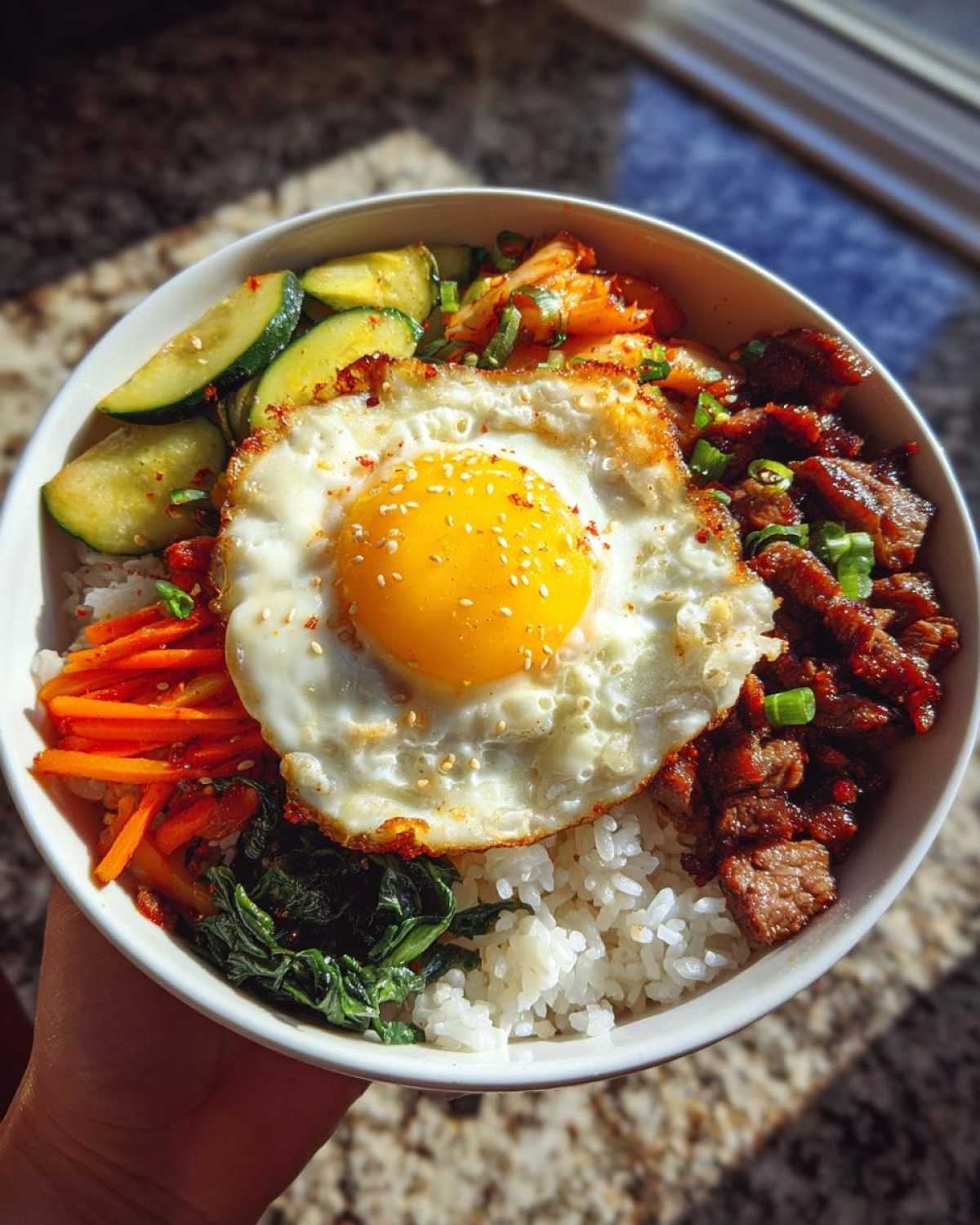
Beef Marinade for Your Korean Bibimbap Bowl
The magic starts with our simple yet flavourful beef marinade. Mix soy sauce, sesame oil, brown sugar, minced garlic, and black pepper. This blend tenderizes the beef and infuses it with that classic Korean taste. Marinate the thinly sliced beef for at least 30 minutes. This step is key for maximum flavour!
Fresh Vegetable Medley for Your Korean Bibimbap Bowl
Now for the rainbow of veggies! We’ll sauté shiitake mushrooms until they’re tender. Then, the spinach wilts down beautifully. Next, sauté julienned carrots and zucchini until they’re tender-crisp. Uniform cuts ensure everything cooks evenly, making each bite a delight. Season them lightly with salt. These colourful additions are what make a bibimbap so vibrant and healthy.
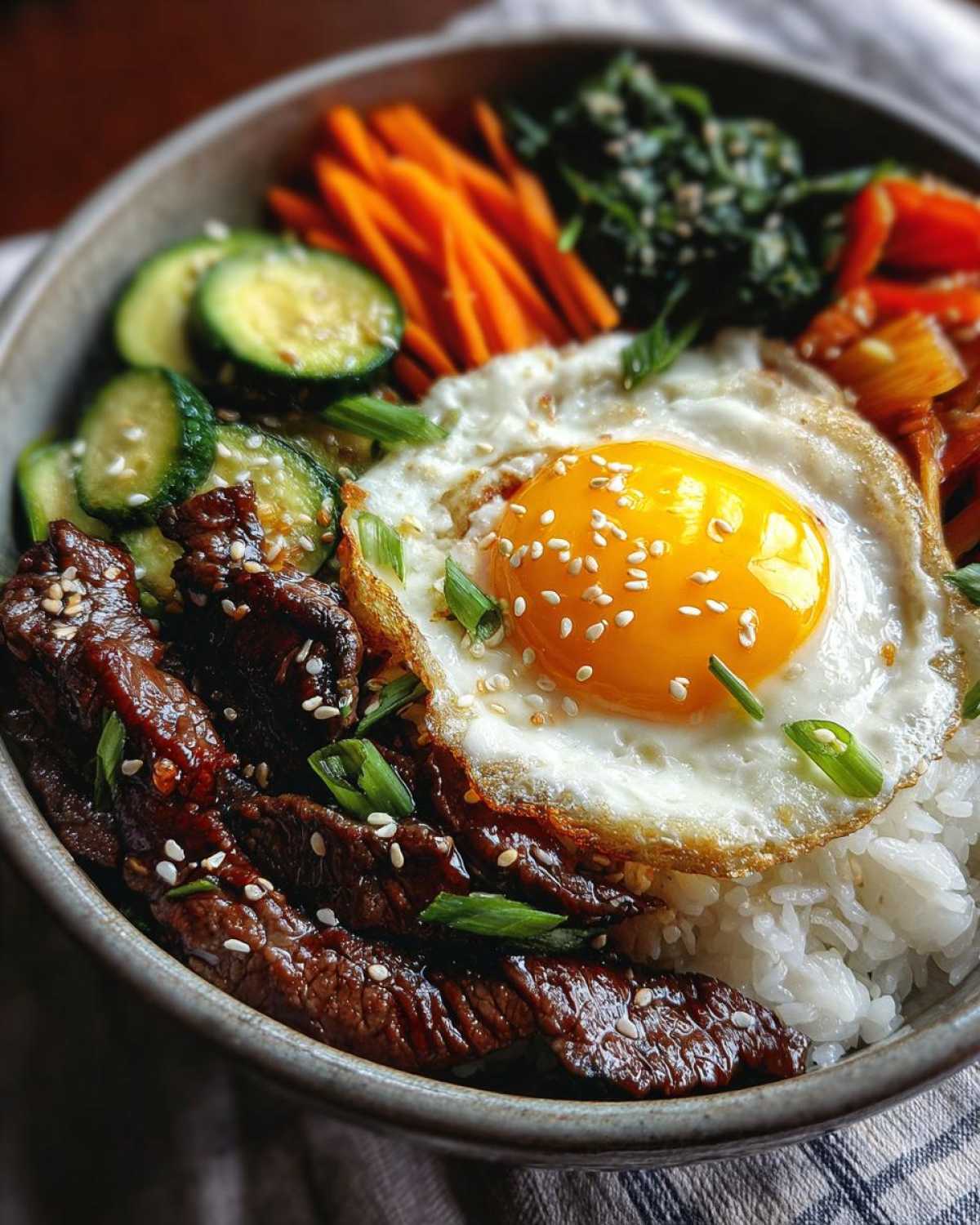
The Perfect Fried Egg Topping
No bibimbap is complete without that glorious fried egg! Aim for a sunny-side-up style. Cook it gently until the whites are set but the yolk is still wonderfully runny. This liquid gold is perfect for mixing into the rice and veggies.
Essential Rice Base
We need four cups of cooked rice as our foundation. Short or medium-grain rice works best here. Ensure it’s fluffy and ready to soak up all those delicious flavours.
Crafting Your Delicious Korean Bibimbap Bowl
Now for the fun part – bringing all these beautiful components together! It’s like painting with food, and the result is simply stunning. Let’s get cooking and assemble your very own Korean Bibimbap Bowl.
Marinating and Cooking the Beef
First, let your marinated beef mingle for at least 30 minutes. Then, heat a tablespoon of vegetable oil in your skillet over medium-high heat. Add the beef in a single layer; don’t crowd the pan! Cook until it’s beautifully browned. This ensures a lovely sear. Remove the beef and set it aside. It’s already smelling amazing, isn’t it?
Sautéing the Vibrant Vegetables
In that same skillet, add your shiitake mushrooms. Sauté them until they’re nice and tender. Then, toss in the spinach and cook just until it wilts. Remove these and set them aside with the beef. Now, add the julienned carrots and zucchini. Sauté these until they’re tender-crisp, about 3-5 minutes. Season them with a pinch of salt. Keeping them separate helps maintain their unique textures and colours.
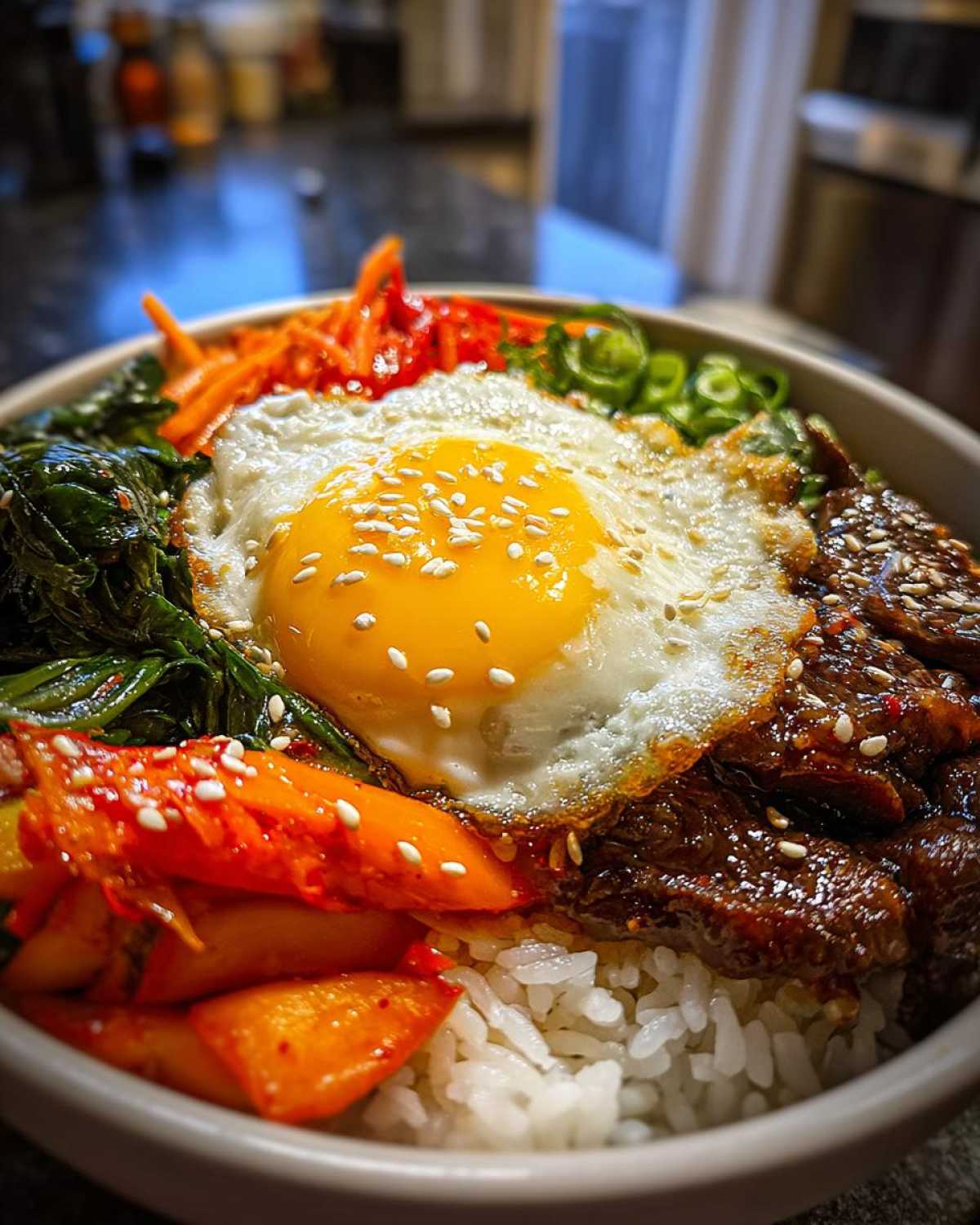
Assembling Your Korean Bibimbap Bowl Masterpiece
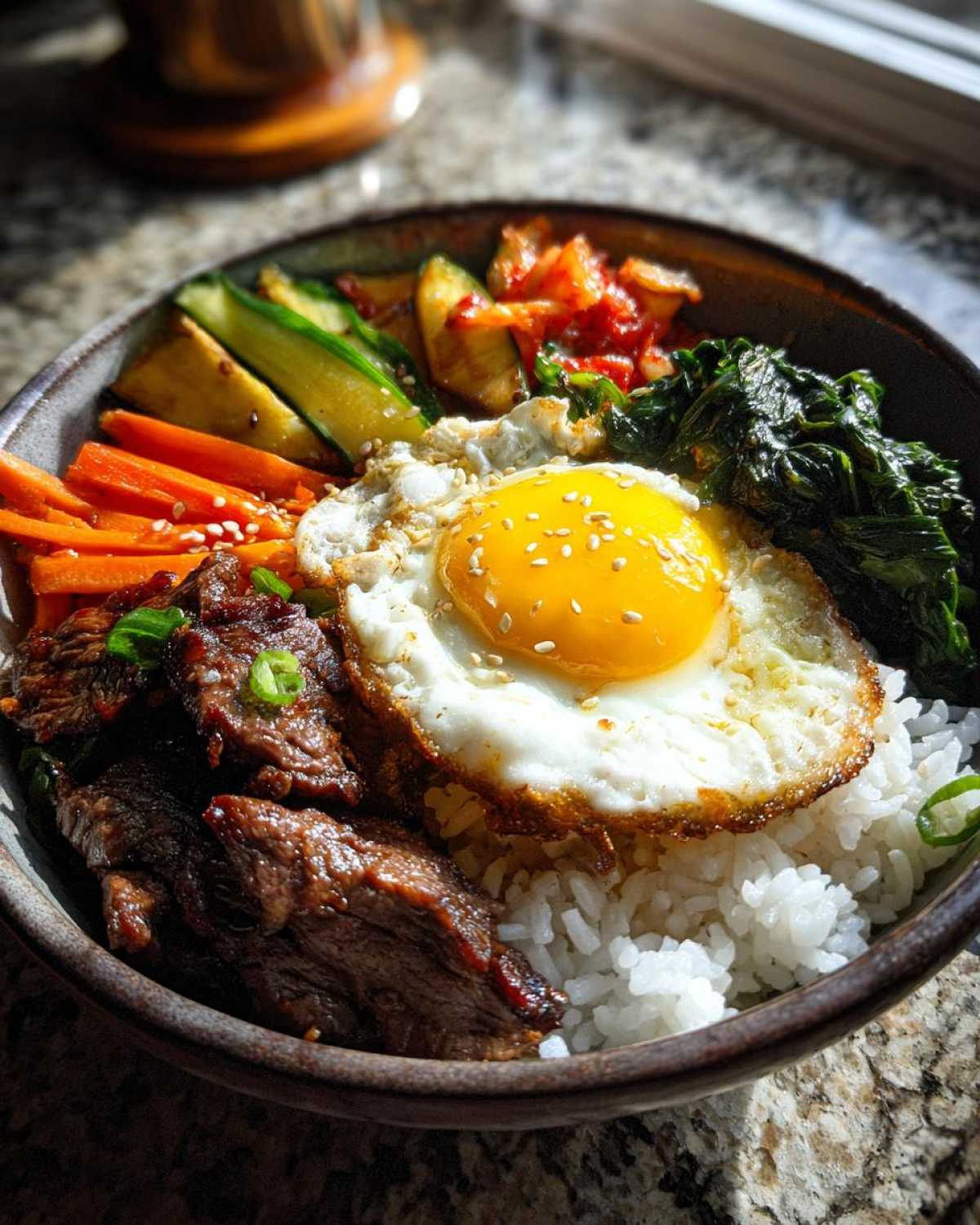
Time to build your bowls! Start with a generous scoop of fluffy rice in each bowl. Artfully arrange portions of the cooked beef, sautéed mushrooms, wilted spinach, and the colourful carrots and zucchini over the rice. Make it look pretty! Finally, gently place a perfectly fried egg right on top. That runny yolk is pure magic, ready to be mixed in!
Tips for a Perfect Korean Bibimbap Bowl
Making a truly fantastic Korean Bibimbap Bowl is all about those little details. To make your weeknight cooking easier, I often prep the marinated beef and some of the veggies ahead of time. It really speeds things up! When sautéing your vegetables, remember to cook them to tender-crisp. This gives a lovely bite to your bibimbap. And that egg? Don’t overcook it! A runny yolk is essential for that creamy, flavourful mix.
Ingredient Swaps and Customization
This Korean rice bowl is wonderfully forgiving! For a delicious vegetarian Korean Bibimbap Bowl, simply swap the beef for firm tofu or extra mixed vegetables like bell peppers or broccoli. Feel free to use whatever seasonal produce you have on hand. Don’t be afraid to adjust the seasonings to your liking. That’s the beauty of home cooking – making it perfectly yours! For more vegetarian inspiration, check out our Vegan Chili Recipe or our Crispy Cajun Tofu Bites.
Serving and Enjoying Your Korean Bibimbap Bowl
Now for the best part – digging in! Garnish your beautiful Korean Bibimbap Bowl with a sprinkle of sesame seeds. Serve it with a dollop of gochujang sauce on the side; you can add as much or as little as you like. Before you take your first bite, grab your spoon and gently mix everything together. This blends all those wonderful flavors and textures for the ultimate Korean rice bowl experience!
Storing and Reheating Leftover Korean Bibimbap Bowl
Leftovers are great! Store any extra components of your Korean Bibimbap Bowl separately in airtight containers in the fridge. This keeps everything fresh. To reheat, warm the rice and cooked toppings gently on the stovetop or in the microwave. Fry a fresh egg if you want that perfect runny yolk again. Enjoy your delicious Korean rice bowl leftovers!
Korean Bibimbap Bowl: Frequently Asked Questions
Got questions about making this delicious Korean Bibimbap Bowl? I’ve got answers!
Can I make this bibimbap vegetarian?
Absolutely! For a fantastic vegetarian Korean Bibimbap Bowl, just skip the beef. Use firm tofu, sliced and pan-fried until golden, or add more colourful vegetables like bell peppers, snap peas, or even some crispy sweet potato. It’s just as satisfying!
What is gochujang sauce?
Gochujang is a staple Korean condiment. It’s a spicy, savory, and slightly sweet fermented chili paste. It adds a wonderful depth of flavor and a kick to your Korean rice bowl. You can usually find it in Asian grocery stores or the international aisle of larger supermarkets. It’s a must-try! For more information on Korean cuisine, you can explore resources on KoreanFood.com.
How do I store bibimbap components?
It’s best to store the cooked beef, sautéed vegetables, and rice separately. Use airtight containers and keep them in the refrigerator. This helps maintain the texture and freshness of each element for your next Korean Bibimbap Bowl.
Can I use different vegetables?
Definitely! The beauty of this Korean Bibimbap Bowl is its versatility. Feel free to use seasonal vegetables you love. Think bean sprouts, cucumber, or even some kimchi for an extra flavour boost. Just make sure to prepare them similarly for the best results.
A Note on Korean Bibimbap Bowl Nutrition
Please remember that the nutritional information provided for this Korean Bibimbap Bowl is an estimate. It can vary based on the specific ingredients and preparation methods you use.
PrintIncredible Korean Bibimbap Bowl Recipe

Create a vibrant and delicious Korean Bibimbap Bowl at home! This recipe features tender marinated beef, a colorful assortment of sautéed vegetables, and a perfectly fried egg, all served over fluffy rice. It’s a delightful and satisfying meal that brings a taste of Korea to your table.
- Prep Time: 30 minutes
- Cook Time: 30 minutes
- Total Time: 1 hour
- Yield: 4 servings
- Category: Main Course
- Method: Sautéing and Frying
- Cuisine: Korean
- Diet: Vegetarian
Ingredients
- 1 lb beef sirloin, thinly sliced
- 2 tablespoons soy sauce
- 1 tablespoon sesame oil
- 1 tablespoon brown sugar
- 1 clove garlic, minced
- 1/2 teaspoon black pepper
- 1 cup shiitake mushrooms, sliced
- 1 cup spinach
- 1 cup carrots, julienned
- 1 cup zucchini, julienned
- 1 tablespoon vegetable oil
- Salt to taste
- 4 cups cooked rice
- 4 large eggs
- Sesame seeds for garnish
- Gochujang sauce for serving
Instructions
- In a bowl, combine soy sauce, sesame oil, brown sugar, minced garlic, and black pepper. Add the thinly sliced beef and marinate for at least 30 minutes.
- Heat vegetable oil in a skillet over medium-high heat. Add the marinated beef and cook until browned. Remove beef from skillet and set aside.
- In the same skillet, add shiitake mushrooms and sauté until tender.
- Add spinach to the skillet and cook until wilted. Remove and set aside.
- Add carrots and zucchini to the skillet. Sauté until tender-crisp. Season with salt.
- Fry the eggs in a separate skillet until the whites are set and the yolks are still runny.
- To assemble the bowls, spoon cooked rice into each bowl.
- Arrange portions of marinated beef, sautéed mushrooms, spinach, carrots, and zucchini over the rice.
- Top each bowl with a fried egg.
- Garnish with sesame seeds and serve with gochujang sauce on the side.
Notes
- For a vegetarian option, substitute the beef with firm tofu or extra mixed vegetables.
- Feel free to customize the vegetables based on your preference or what’s in season.
- Ensure your beef is sliced very thinly for best marinating and cooking results.
- You can prepare the marinated beef and pre-sauté the vegetables ahead of time to make assembly quicker.
Nutrition
- Serving Size: 1 bowl
- Calories: 650
- Sugar: 10g
- Sodium: 900mg
- Fat: 30g
- Saturated Fat: 10g
- Unsaturated Fat: 20g
- Trans Fat: 0g
- Carbohydrates: 70g
- Fiber: 8g
- Protein: 30g
- Cholesterol: 150mg



Comments are closed.